Phosphorus and the Lake
-
The primary dissolved form of phosphorus, called orthophosphate, is readily available for phytoplankton and plant uptake. Generally produced by natural processes
-
Compromises inorganic (e.g. minerals) and organic forms that are attached to soil, dead organic matter, or living biomass. Can change from one chemical form to another within the phosphorus cycle. Typically enter the lake via wind transport, atmospheric deposition, or erosive processes and sediment transport.
Phosphorus is a key nutrient influencing plant growth, including algae bloom formation. It is a limiting nutrient, meaning that growth will stop as soon as the phosphorus runs out. However, too much phosphorus can accelerate and promote excessive growth of aquatic plants and algae, leading to degraded water quality.
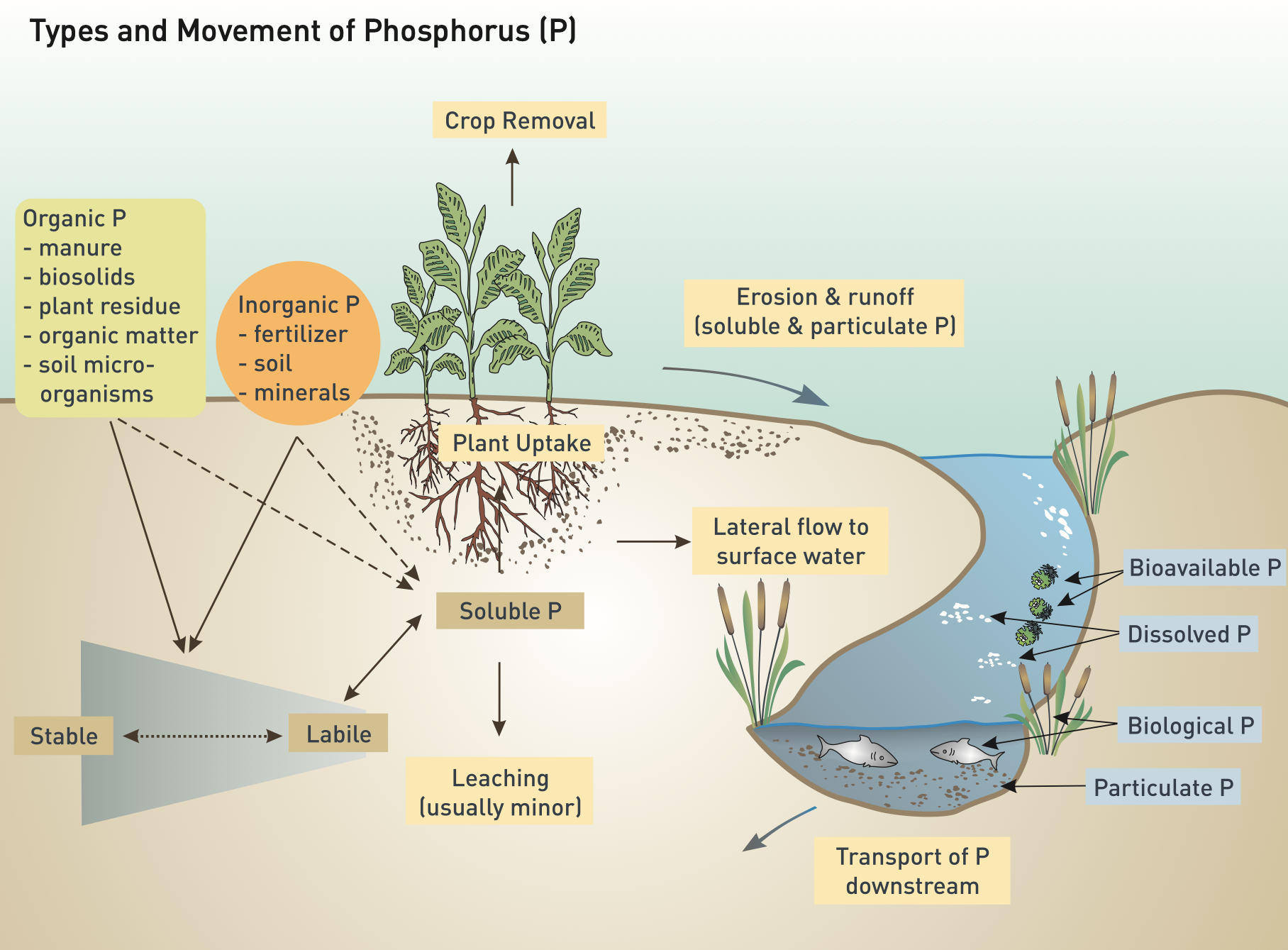
Government of Alberta - Phosphorus Sources and Management AGDEX 090-4.
Phosphorus Cycle
Phosphorus enters the lake through runoff, picking it up from fertilizers, animal manure, soil particles, and roadways. Algae and aquatic plants use phosphorus, and when excess phosphorus enters the lake, eutrophication occurs. As algae and plants complete their life cycles and settle at the bottom of the lake, their phosphorus becomes part of the organic matter accumulating in the bottom sediments. During decomposition, oxygen is consumed, and phosphorus is released back into the water or sediments. Oxygen levels near the lake bottom decline, triggering chemical reactions in the sediment that release stored phosphorus back into the water, which can then rise into the water column. This process is called internal loading, and it is a major reason eutrophic lakes can remain nutrient-rich, even if external inputs are reduced. The released phosphorus becomes available to algae again, creating a positive feedback loop.
“Excess phosphorus can result in abundant growth of aquatic plants. This can lead to a shift in the assemblages of fish and invertebrates toward less desirable species, including pollution-tolerant ones, which may include invasive species.”
Land Cover and Phosphorus Levels
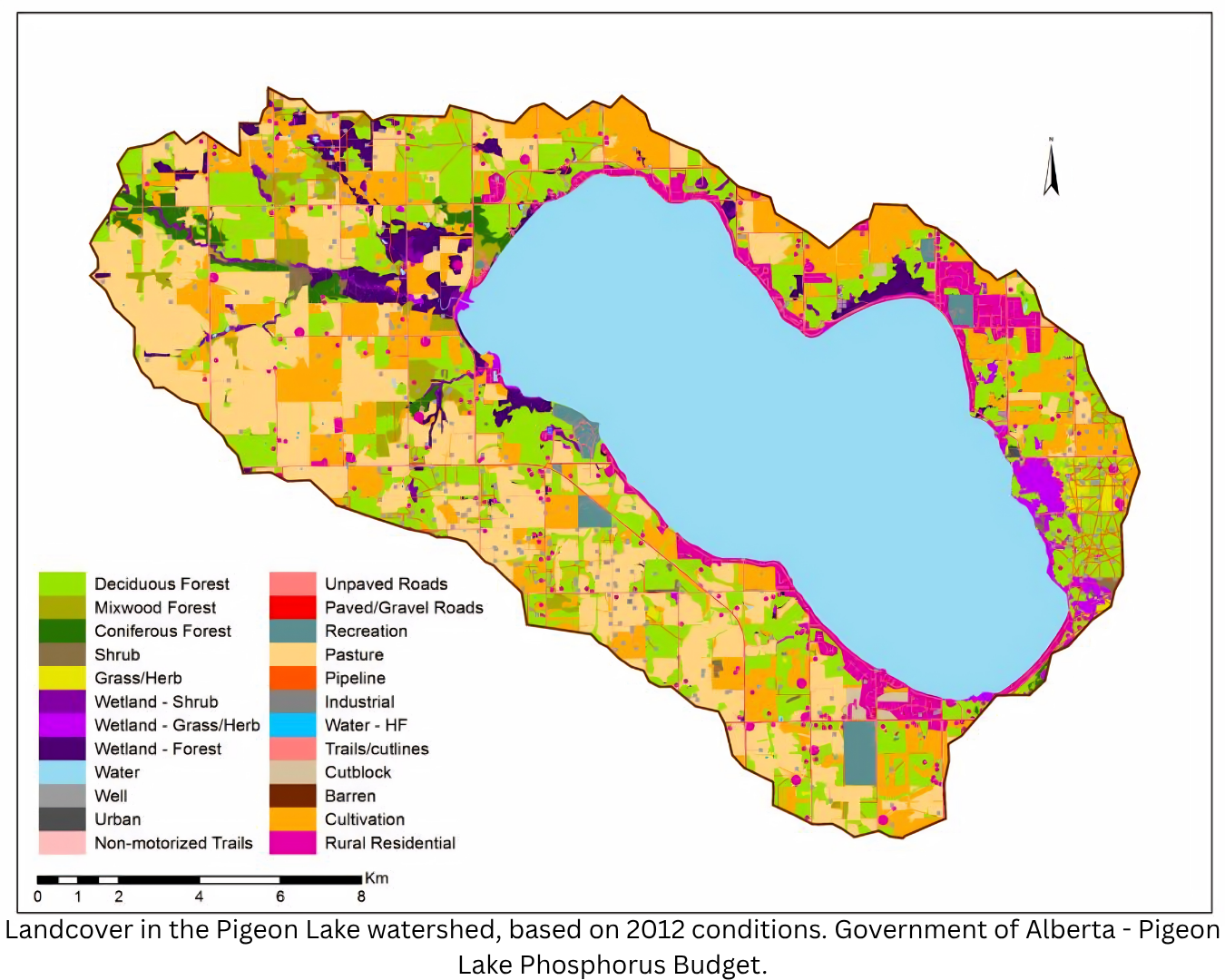
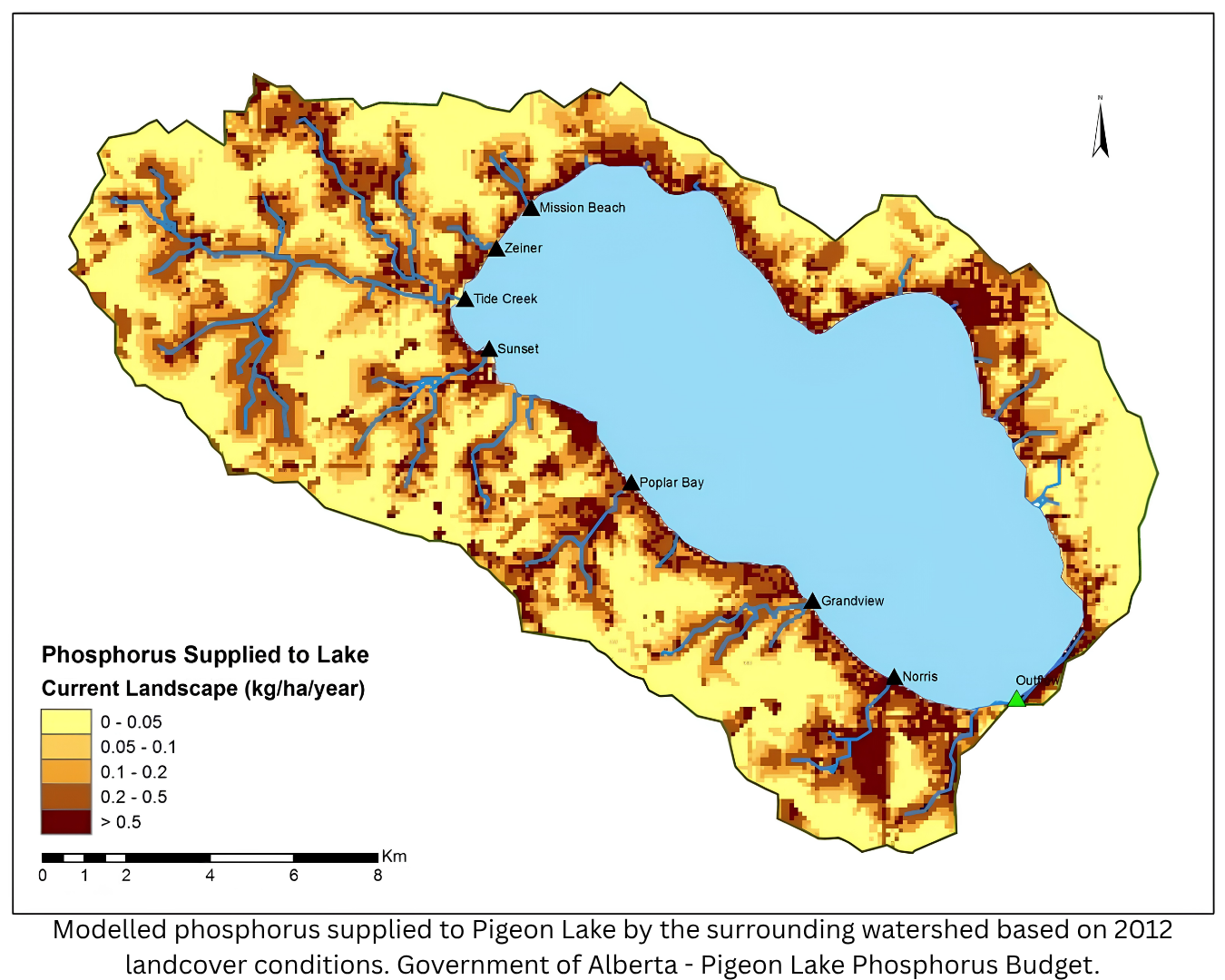
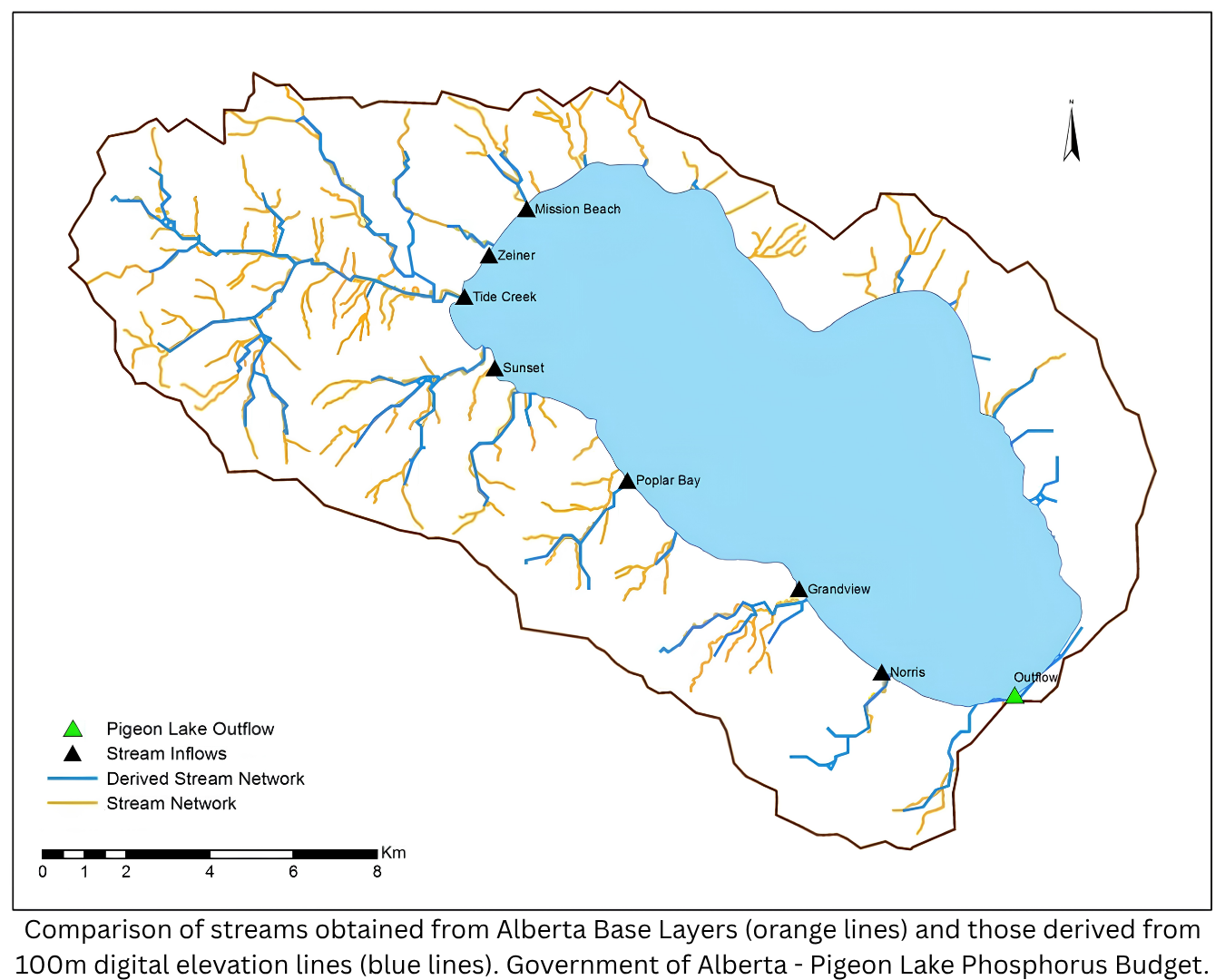
The Pigeon Lake watershed is highly developed, with agriculture accounting for ~75% of the land area. ~25% of the phosphorus inputs into Pigeon Lake come from watershed-level sources, meaning that the land cover types and land use activities are highly influential to the water quality and quantity of the lake. Near streams and the lake shore are the most abundant sources of phosphorus flowing into Pigeon Lake.
Human inputs of phosphorus include runoff from agricultural areas, especially where fertilizers and manure have been applied in quantities that exceed the nutritional requirements for crops, runoff from forestry and urban expansion, industrial emissions to soil and water, municipal and household water discharge, septic systems, and wind-blown dust from bare soils. In the absence of human development, phosphorus exists only in phosphate-bearing rock and is introduced into water through soil and rock erosion. Therefore, water in regions with lots of soil (such as the prairies) will have naturally high phosphorus levels.
Analysis
Trend analysis of total phosphorus showed no significant change between 1983 and 2025 (Tau = 0.0233, p = 0.4989). However, large variability has been observed in recent years compared to historical data, which continues to be investigated.
Trophic Status
Trophic status refers to the overall level of biological productivity within a lake and is a key characteristic of water quality. In Alberta, many lakes are naturally high in phosphorus from nutrient-rich underlying sedimentary bedrock, soils, and thick glacial deposits, but can also come from urbanization, industry, and agriculture.
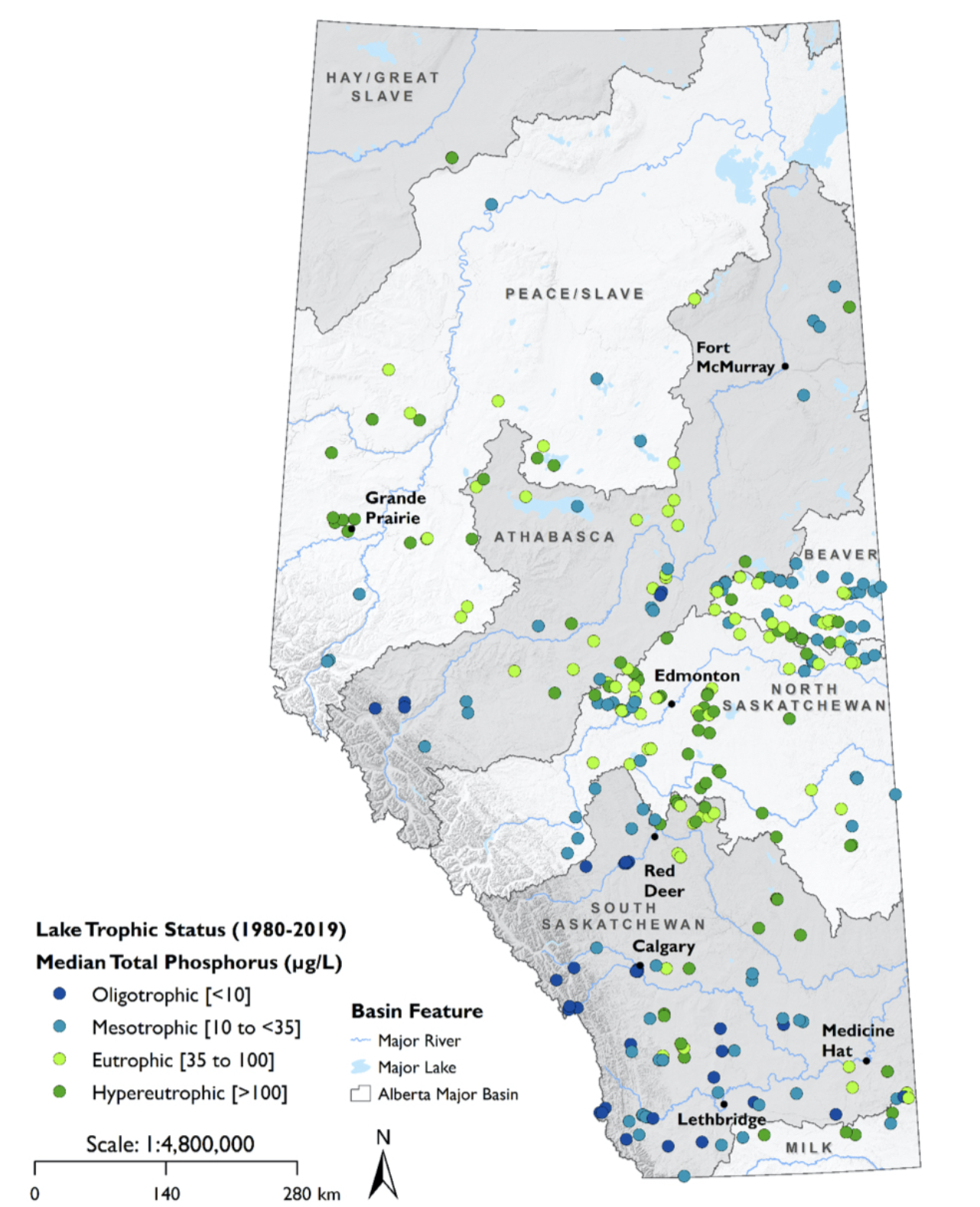
Lake trophic status based on median total phosphorus concentration across Alberta lakes between 1980 and 2019. Government of Alberta - Water indicators - Lake trophic status.
-
Low in phosphorus and biological production (low algal biomass). Clear what and plenty of oxygen throughout the year to support fish and other aquatic organisms.
-
Moderate levels of phosphorus support greater biological production. Moderate water clarity.
-
Great concentrations of phosphorus result in greater aquatic plant and algae growth. Algal blooms may occur during the warmest months. Clarity is significantly reduced, and oxygen depletion in deep waters may occur throughout the year due to excessive microbial decomposition of plant and algae matter.
-
Extreme levels of phosphorus and biological production. Algal blooms are common and are often intense and persistent throughout the summer and into autumn. Oxygen depletion may extend to the surface.
More Info
The Alberta Lake Management Society - Pigeon Lake Report 2025
Ecosystem Services Assessment - Pigeon Lake Phosphorus Runoff Modelling
Government of Canada - Phosphorus in aquatic ecosystems
Government of Alberta - Water indicators - Lake trophic status
Government of Alberta - Phosphorus Sources and Movement