Cyanobacterial (Blue-Green Algal) Bloom Advisory
As of July 20, 2026, Alberta Health Services (AHS) has issued a cyanobacterial (blue-green algal) bloom advisory for Pigeon Lake.
This doesn’t mean the end of our summertime fun! Check out the info below so that you and your family can enjoy the lake safely:
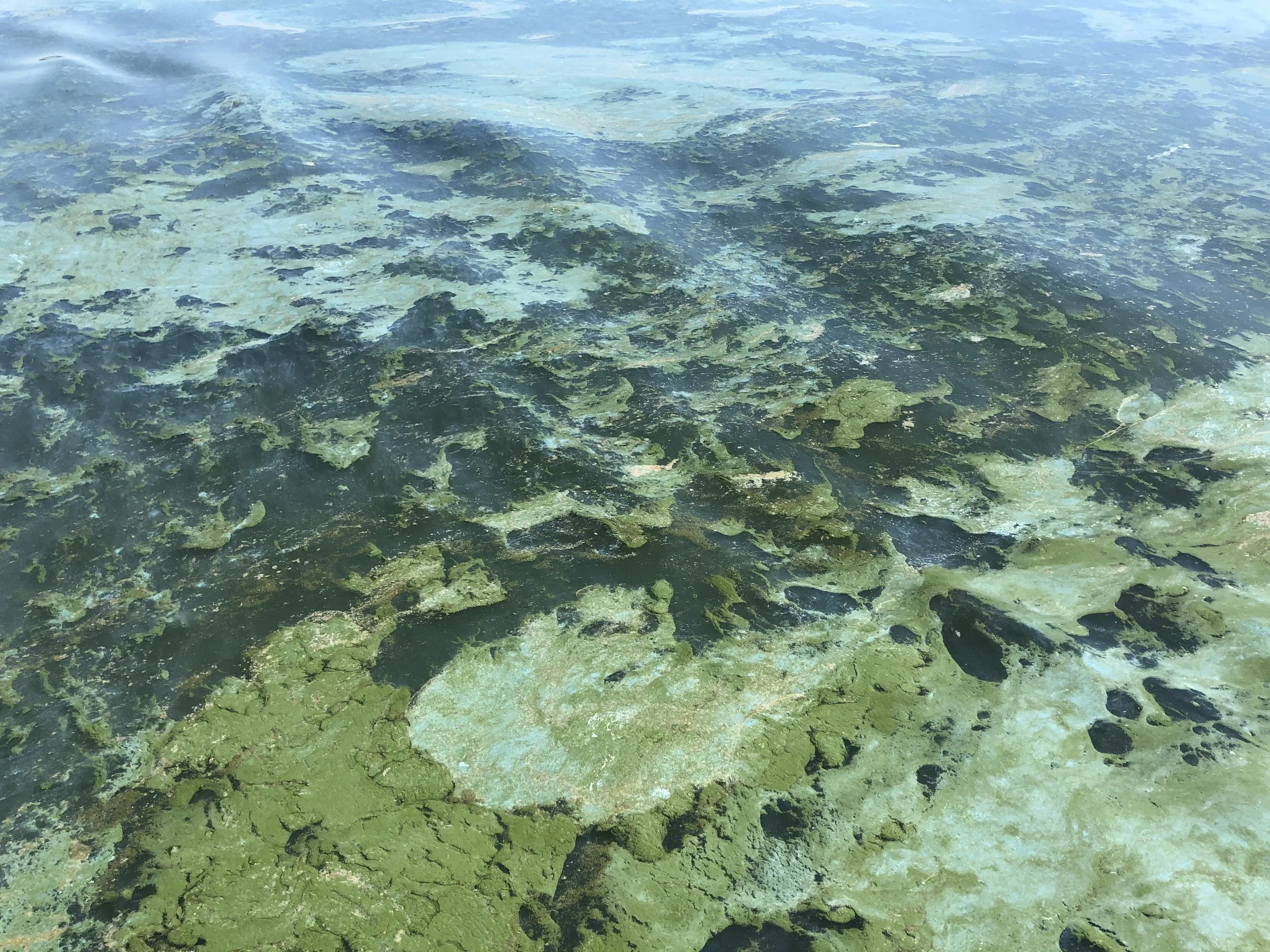
Cyanobacterial bloom on Pigeon Lake (July 2020)
What is Cyanobacteria?
Cyanobacteria (or blue-green algae) are a type of photosynthetic bacterium that lives naturally in water. It is not actually a type of true algae. It often forms in warm, calm conditions, which allows it to multiply and form blooms.
Some bloom-forming types of blue-green algae produce toxins. When they die and decay, toxic chemicals may be released into the water. The toxins can cause health effects in humans, pets and livestock. In extreme cases, it can result in death.
How can I identify a cyanobacterial bloom?
Blooms can be identified by three main characteristics:
Colour - blue-green, greenish-brown, brown, or red-pink. Decomposing blooms can appear discoloured, ranging from white to purple.
Form - depending upon the species and composition of the bloom, it may appear like grass clippings, globs, fuzz balls, paint/pea soup, or like scum on the surface of water.
Smell - often smells musty or grassy. Decomposing blooms can smell like ammonia.
Some blooms don’t contain toxins, but you can’t tell if a bloom is harmful or not from how it looks. If you see a bloom, always take precautions as if it is toxic.
What do I do if I encounter a cyanobacterial bloom?
Residents living near the shores of this lake, as well as visitors, are advised to take the following precautions:
Do not swim or wade in any areas where blooms are visible.
Avoid all contact with cyanobacterial blooms in the water and washed up on shore. Wash with clean tap water as soon as possible if contact occurs.
Do not drink or cook with water from this lake.
Do not eat whole fish or fish trimmings from this lake as fish may store toxins in their liver. Fish fillets contain fewer toxins and are safer to eat.
Keep pets away from the water. Do not allow pets to swim in areas where cyanobacterial blooms are visible or to contact blooms in the water or on the shore.
Do not feed whole fish or fish trimmings from this lake to your pets.
People who come in contact with a cyanobacterial bloom or who ingest water containing cyanobacteria may experience skin irritation, rash, sore throat, sore red eyes, swollen lips, fever, nausea and vomiting and/or diarrhea. Symptoms can appear within one to three hours and resolve in one to two days.
Pigeon Lake is quite large, and wind/wave action can cause blooms to move across the lake over the course of the day. Please note that if there is no evidence of a bloom in your area, you can still swim, boat, and enjoy recreational activities safely.
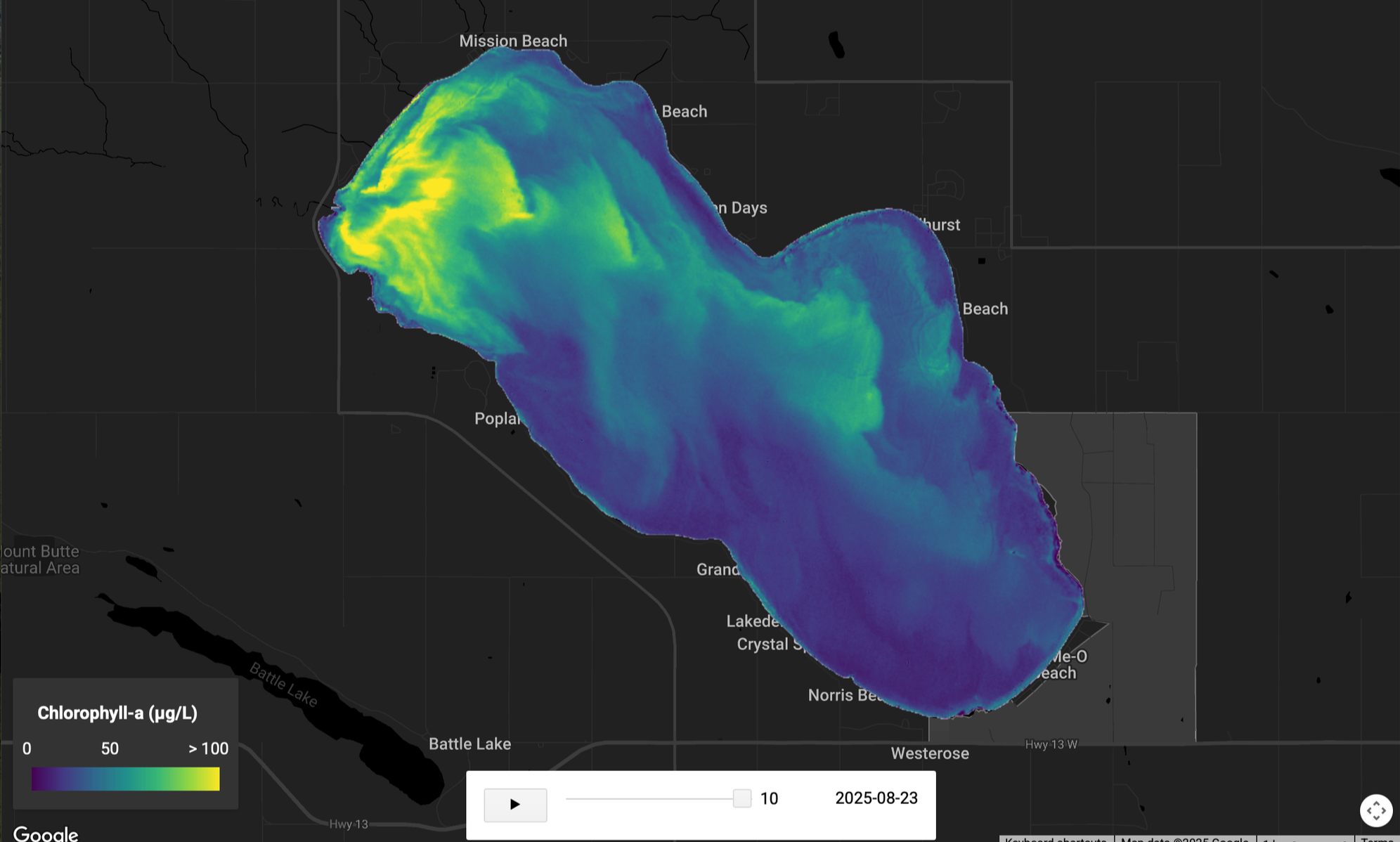
Screenshot of Pigeon Lake satellite image (August 23, 2025) from algalbloomtracker.ca
How long will the bloom last?
It’s hard to say for sure. Most toxins are degraded within 2 weeks, but can be in the water at low levels for many months after a bloom forms. Water at Pigeon Lake is tested weekly during the summer months to monitor changes in water quality as the season goes on. Check the AHS Active Health Advisories page for any updates to the situation.
You can also check out the Algal Bloom Tracker app to see the most up-to-date information available on the presence of algal blooms using a combination of satellite imagery and on-site samples.