Mussel Monitoring
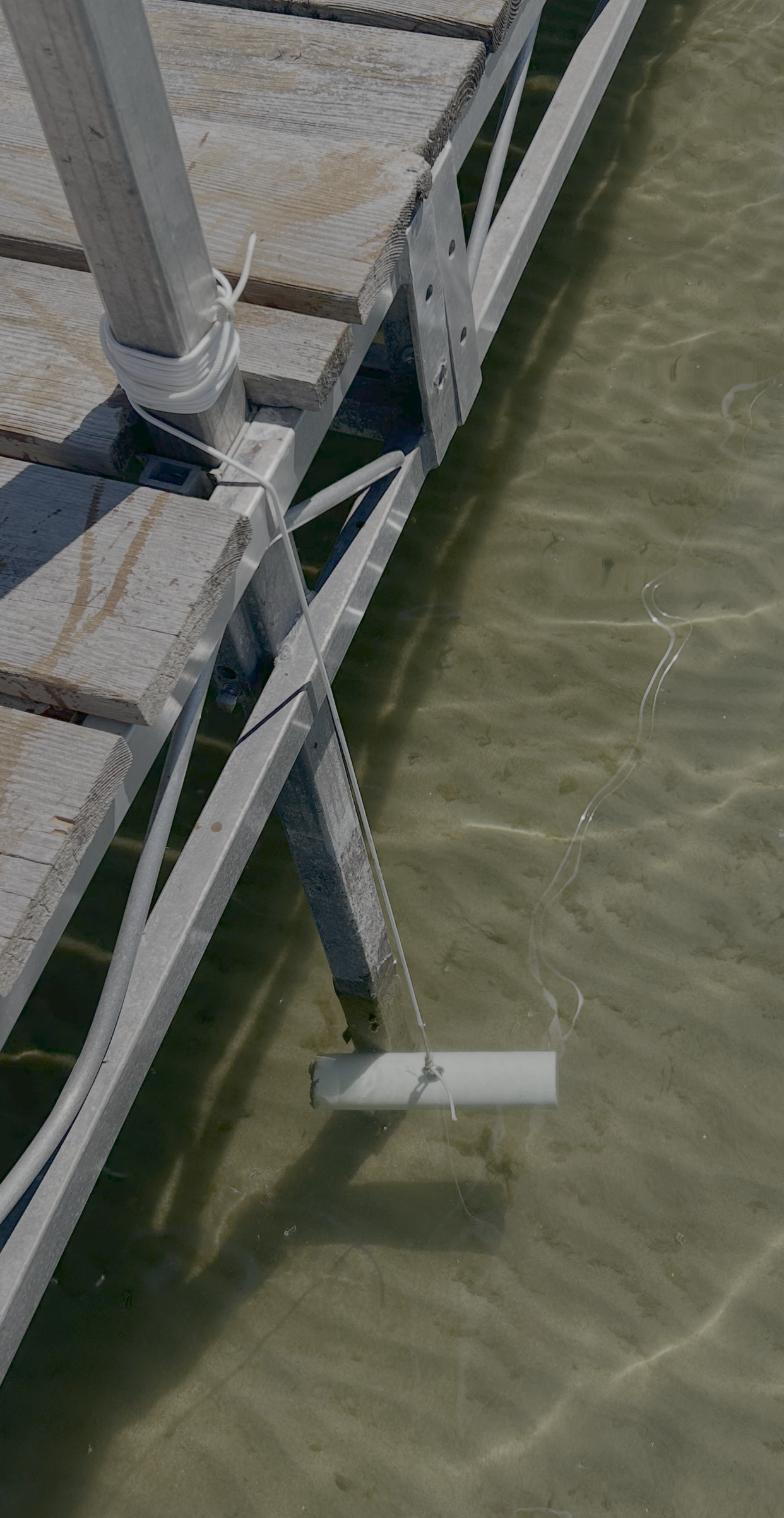
Mussel Monitoring involves suspending a substrate in the water from a fixed structure like a dock or boat hoist. The substrate is made of material that invasive mussels would bind to if they were introduced into a water body. These substrates are easy to remove from the water for inspection, making them a great indicator of the presence or absence of invasive mussels.
Purpose: Invasive mussels pose a significant risk to Alberta Lakes, causing damage to infrastructure, boats, as well as massive ecological consequences. Once an invasive mussel is introduced to a waterbody, there is a period of time before it matures and reproduces. If mussels are detected during this stage where very few are present in the water body, there are more opportunities for intervention. Once established in a waterbody, there is very little that can be done to manage invasive mussels. The most important strategy for preventing invasive mussel infestations is to prevent the introduction. “Clean, Drain, Dry” campaigns and inspection stations promote the principles which prevent the introduction of invasive mussels into a water body.
Monitoring acts as a second line of defense, so that if a mussel was introduced, we could detect it and respond as soon as possible before establishment. There are 2 major ways to monitor for mussel species: environmental DNA sampling (this involves collecting water samples and analyzing for DNA traces that are left behind in the water by the mussel species if they are present), or the much more simple way: mussel monitoring substrate initiatives. Invasive mussels (Zebra and Quagga) adhere to various substrates including metal, rock, plastic, or fiberglass, but native mussel species are free-floating and do not attach, therefore, an attached mussel is an invasive mussel.
What is a mussel monitoring tube made of: Monitoring tubes are made of 3 parts - a substrate in which mussels will grow on (most commonly a potable water safe, PVC tube), something to weight the substrate down so that it remains suspended in the water column (the PVC tube is usually filled with concrete), and a way to hang the tube (usually an eye bolt and string/chain).
If you suspect an invasive mussel has been detected on your monitoring substrate, let us know immediately by emailing info@PLWA.ca or calling the Alberta Invasive Species Hotline directly 1-855-336-2628
Securing the Monitoring tube:
On your dock or boat hoist, select an area that will not interfere with moving your boat, that is easily accessible, and ideally is in a shaded area.
Secure the monitoring tube to your dock using the provided string or chain. Ensure that the tube is suspended in the water (not sitting on the lake floor), ideally about 1 foot off the ground.
Checking your monitoring tube:
Run your hands along the monitoring tube to feel for attached mussels. If attached mussels are present, they will be hard, with a maximum size of 1-3cm in diameter. Remember that there are no native mussel species in Alberta that attach to substrates, so an attached mussel is a bad mussel. If you suspect an invasive mussel might be present, contact us directly at info@PLWA.ca or the invasive species hotline directly at 1-855-336-2628
Your tube will become crushed with algae, leech eggs, snails, and other “gunk”, so do not be alarmed by this growth.
Record your observations. Observations can be recorded in 2 ways:
Google form: https://forms.gle/Z2JGxqxCLNDcPGqj6
LakeObserver app: See Lakeobserver guide for more information. Create entry → Invasives → create submission.
If your substrate is a mussel monitoring tube, select substrate as “Other/unknown” and under comments add “Mussel monitoring tube”
If no invasive species are found, under species, type “none”, report type “animals”. Under “num. Observed” select 0. You can upload a photo of your tube even if no invasives are observed
If invasive species are present, add the suspected species in the species bar (ex. Zebra mussel, quagga mussel), upload a photo, and immediately report your findings by emailing info@PLWA.ca or calling the Alberta Invasive Species Hotline directly 1-855-336-2628